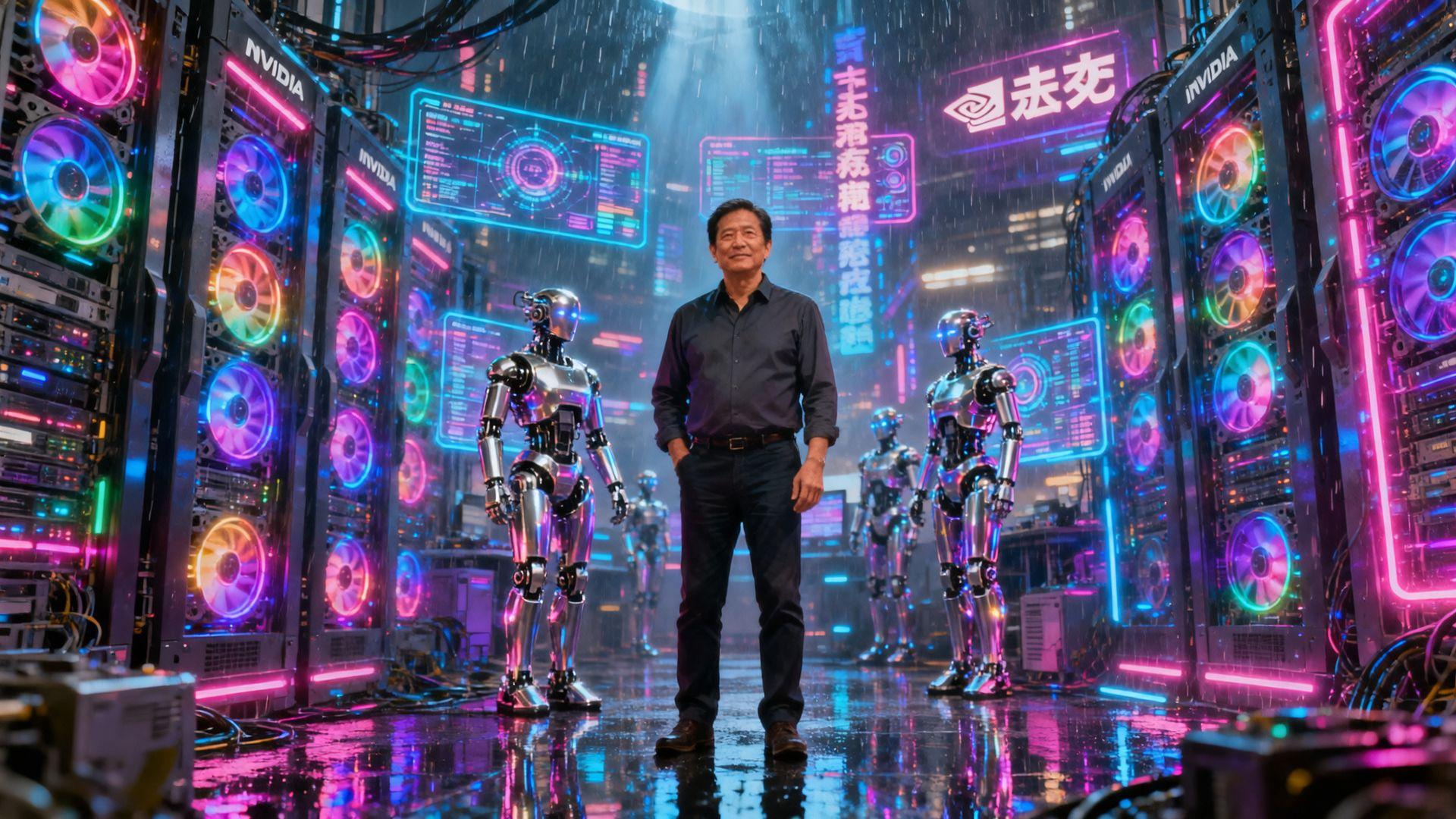
AI Daily Digest 2026-07-20: Nvidia Conquers Japan and Christopher Nolan Warns of AI 'Trojan Horse'
- Ai daily
- July 20, 2026
Table of Contents
🇯🇵 Nvidia Conquers Japan: Jensen Huang Clinches Sovereign AI Deals
Nvidia CEO Jensen Huang recently wrapped up a high-profile visit to Tokyo, leaving with a series of landmark agreements that span Japan’s entire technology ecosystem. The most prominent deal was a partnership with SoftBank to build a massive AI supercomputer powered by the latest Blackwell chip architecture. Concurrently, other major telecommunication and infrastructure providers, including NTT, Sakura Internet, and KDDI, announced expansions of their GPU data centers.
This trip highlights the global momentum behind “Sovereign AI”—Japan’s strategic push to own its computing capabilities and localized AI models rather than relying entirely on foreign cloud monopolies. Huang cleverly praised Japan’s manufacturing heritage, emphasizing that AI will be the primary engine transforming robotics and factory automation—areas where the country has traditionally excelled. In this new gold rush, Nvidia positions itself as the ultimate pickaxe seller, converting cloud infrastructure into modern “AI factories.” By establishing domestic computing sovereignty, Japan hopes to develop large language models optimized for its language and unique cultural nuances, securing its national data against external control.
Nguồn: TechCrunch
🐴 Director Christopher Nolan Calls AI an Obvious “Trojan Horse”
Oscar-winning director Christopher Nolan has offered some biting commentary on the AI wave sweeping through Hollywood. He bluntly labeled AI tools as an obvious “Trojan horse,” joking that “everybody knows the Greeks are inside.” Nolan expressed deep concern that major studios are rushing to adopt artificial intelligence without addressing fundamental issues of authorship, copyright, and human artistic integrity.
Nolan argues that entertainment executives view AI as a magical tool to cut production costs and displace human creative labor. However, in doing so, they risk stripping the soul out of storytelling. The “Oppenheimer” director’s skepticism serves as a necessary reality check amid blind technological enthusiasm. Cinema is a human art form built on personal suffering, lived experiences, and intuitive decisions made on set. Delegating scripts or visual effects to statistical probability algorithms diminishes the cultural landscape. His warning highlights the growing copyright battle between creators and AI giants, where technology companies scrape human intellectual property without consent or fair compensation.
Nguồn: TechCrunch
🌐 Nonprofit Current AI Races to Build a Free “World Wide Web of AI”
Nonprofit organization Current AI is accelerating its ambitious project to create a decentralized, open, and free platform dubbed the “World Wide Web of AI.” The organization’s goal is to ensure that advanced AI technology is accessible to all segments of society, preventing commercial tech giants from monopolizing AI capabilities and leaving non-Western cultures behind.
Current AI is focusing on lightweight, open-source models designed to run locally on consumer devices, from mobile phones to laptops. They believe an open infrastructure will mirror the early days of the Internet—a shared public space where anyone can contribute and access knowledge. However, financing this non-profit mission is a massive hurdle, as training and serving state-of-the-art models require billions of dollars. To address this, Current AI is optimizing decentralized cloud computing networks and leveraging community donations. The project offers a hopeful vision of a future where large language models are not just proprietary tools of Silicon Valley, but actual public utilities serving the global good.
Nguồn: TechCrunch
☁️ Alibaba Cloud Unveils “Agent Native Cloud” for Multi-Agent Orchestration
At the World Artificial Intelligence Conference (WAIC) 2026 in Shanghai, Alibaba Cloud officially unveiled “Agent Native Cloud,” a new cloud computing architecture tailored specifically for AI agents. Unlike traditional cloud infrastructure designed for static web apps and basic databases, this new architecture is built from the ground up to support autonomous agent workflows at an enterprise scale.
The platform consists of three core components: “AgentTeams” for orchestrating multi-agent collaboration, “Agentic Computer” to provide a secure sandbox environment for code execution, and a library of reusable agent skills. Alibaba Cloud representatives emphasized that this platform elevates AI agents from experimental tools to reliable enterprise capabilities. The key highlight is security: allowing AI agents to autonomously write and execute code poses significant systemic risks, and Alibaba’s sandboxed environment solves this bottleneck, enabling agents to operate independently and safely.
Nguồn: CryptoBriefing
🧹 The Cleanup Trap: Stop Asking RAG to Fix Bad Data
Writing for VentureBeat, senior data engineer Naveen Ayalla breaks down a common pitfall in corporate AI deployment: attempting to use Retrieval-Augmented Generation (RAG) to gloss over bad data. Many companies assume that large language models are smart enough to filter out duplicate, outdated, or conflicting information in their internal databases during retrieval.
In reality, RAG is not a magical cleanup tool. The mechanics of vector search simply retrieve text passages that are semantically similar to the query, without verifying the accuracy of the underlying facts. If the database contains garbage or overlapping legacy policies, the RAG system will produce incorrect answers and exacerbate hallucinations. Ayalla advises enterprises to focus on building clean data pipelines, tagging accurate metadata, and enforcing strict data governance before implementing AI search. RAG can only succeed when built on a solid data foundation, and no technological shortcut can bypass the essential role of traditional data engineering.
Nguồn: VentureBeat