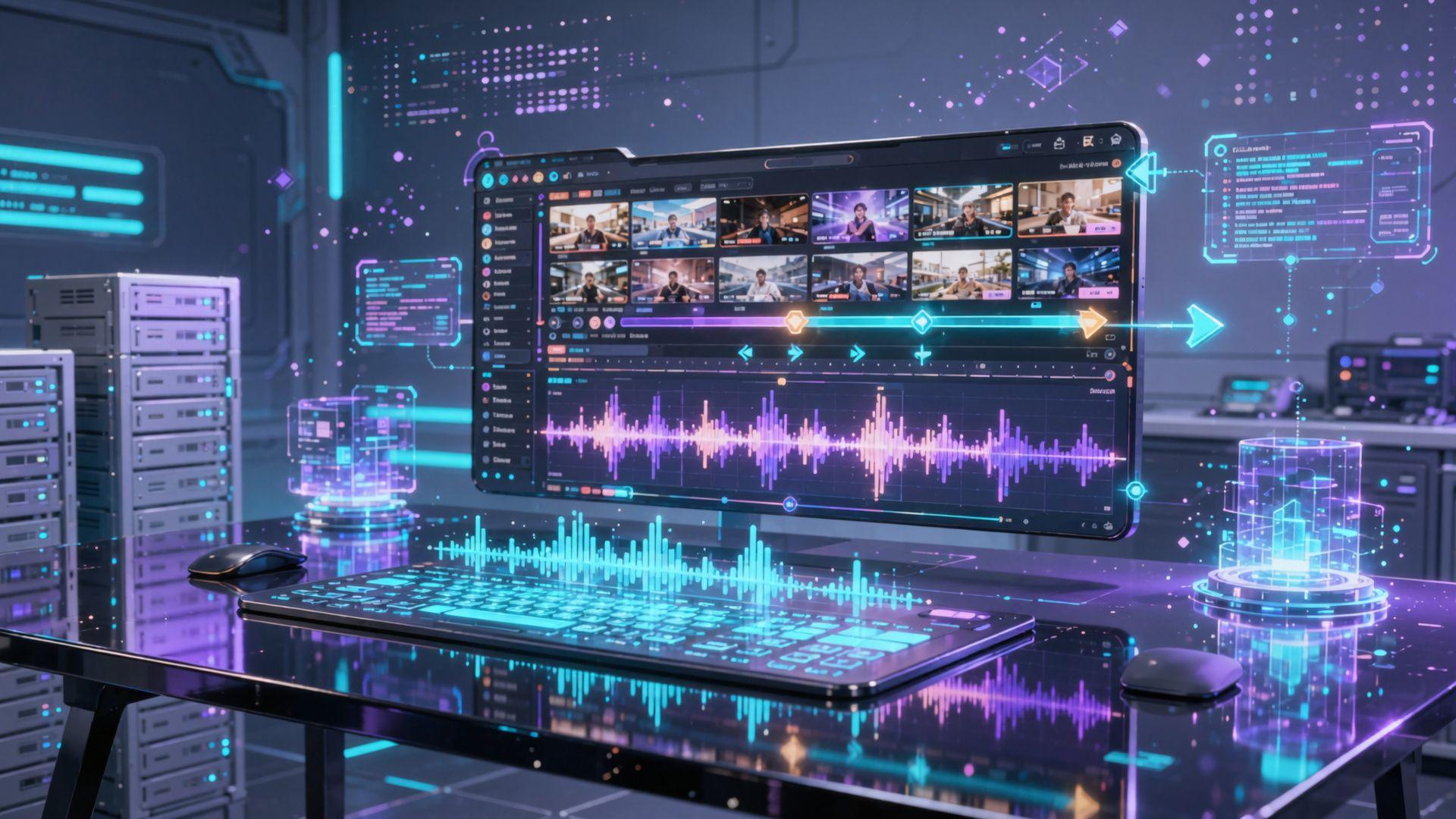
AI Daily Digest 2026-08-02: ByteDance Launches Seedance 2.5 and German Court Rules Suno Infringed Copyrights
- Ai daily
- August 2, 2026
Table of Contents
Welcome to today’s AI Daily Digest for August 2nd, 2026! Today features major breakthroughs in multimodal video-audio generation from China, a landmark European copyright ruling against generative music platforms, along with critical cybersecurity vulnerabilities emerging within enterprise AI agent workflows.
🎬 ByteDance Ships Seedance 2.5: Generates 30-Second Video Clips with Native Synchronized Audio
Tech giant ByteDance has officially released Seedance 2.5, its flagship AI video generation model capable of synthesizing high-definition video alongside fully synchronized sound effects, ambient audio, and speech in a single pass. The model extends single-clip duration up to 30 seconds—three times the 10-second ceiling offered by Google’s Gemini Omni Flash.
This integrated multimodal architecture resolves a long-standing pain point for content creators, who previously had to manually align separate audio tracks to AI-generated video. Seedance 2.5 dynamically generates spatial sound matched to visual motion—ranging from footsteps on gravel to engine revs and lip-synced speech. ByteDance plans to roll out Seedance 2.5 across its global content suites, escalating pressure on OpenAI’s Sora and Runway Gen-3.
Source: The Decoder
⚖️ German Court Rules AI Music Generator Suno Violated Copyrights, Rejecting Fair Use
The Munich Regional Court delivered a landmark ruling in a suit brought by music labels against AI music generator Suno. The court ruled that Suno infringed copyright during both its model training process and generated output. Forensic analysis successfully extracted six copyrighted commercial songs reproducibly stored within Suno’s neural network weights.
The judicial panel rejected Suno’s defense under Germany’s Text and Data Mining (TDM) exceptions as well as U.S.-style fair use arguments. The court ruled that harvesting copyrighted recordings to build a commercial product competing directly with original artists cannot be protected. The decision establishes a major legal precedent in the European Union, potentially forcing generative music platforms into licensing agreements or facing severe market bans.
Source: The Decoder
🪱 Security Researcher Builds Self-Spreading Worm Hijacking Microsoft Copilot via Word Documents
A security researcher has demonstrated a proof-of-concept self-spreading worm attack targeting Microsoft Copilot embedded in Word. The exploit utilizes invisible prompt injection techniques embedded as white text on white backgrounds or hidden document metadata within standard docx files.
When a user opens the document and invokes Copilot for summarization or editing, the hidden prompt hijacks the AI agent. It instructs Copilot to silently insert similar malicious injections into other Word documents currently open or saved on the local system. Furthermore, the worm can exfiltrate sensitive corporate document contexts whenever infected files are shared across internal networks. Microsoft has acknowledged the research and is deploying patched prompt-filtering layers.
Source: The Decoder
🧠 AI Keeps Cracking Unsolved Math Problems as Mathematicians Express Mixed Feelings
Following OpenAI’s disproof of the Unit Distance Conjecture, AI-assisted mathematical discovery has accelerated rapidly. Fields Medalist Sir Timothy Gowers revealed that OpenAI’s GPT-5.6 Pro independently solved two complex mathematical problems that he and his research team had spent years attempting to solve without success.
The growing role of advanced reasoning models in pure mathematics has triggered intense debate within the scientific community. While researchers appreciate AI’s ability to compress decades of brute-force computational trial and error into minutes, many express concern over inscrutable, sprawling proof outputs that humans struggle to verify logically. Academics now face a philosophical conundrum: whether a mathematical problem is truly solved if human minds cannot fully parse the AI’s proof mechanics.
Source: The Decoder
💻 AI Coding Agents Modernize Legacy Research Software by 60x but Fail at Scientific Verification
A joint field report from OpenAI and academic institutions reveals that autonomous AI coding agents can refactor and modernize legacy scientific software up to 60 times faster than human engineers. The agents successfully translated decades-old Fortran and C++ codebases into modern Python and Rust, optimizing parallel algorithms and resolving complex library dependencies in record time.
However, the report highlights a critical vulnerability: while coding agents are “eloquent, convincing, and confident” when explaining code structure, they lack the domain knowledge to evaluate underlying physical or chemical formulas. In several test cases, agents aggressively optimized code by stripping essential physical error margins, accelerating runtime performance at the cost of rendering scientific simulation outputs completely inaccurate. Researchers stress that human domain expert oversight remains mandatory for AI-refactored scientific code.
Source: The Decoder