AI Daily Digest October 05, 2026: Google Restructures Gemini Tiers, Open-Source Bug Bounty Frozen by AI Slop
- Ai daily
- October 5, 2026
Table of Contents
Welcome to the AI Daily Digest for October 05, 2026! Today’s briefing opens the week by spotlighting the friction between soaring datacenter economics and deep architectural innovation. Following a prolonged era of aggressive consumer subsidies, Google has initiated an extensive restructuring of its Gemini product tiers, downgrading free users to its lightweight Flash-Lite model and revoking Pro model access from entry-level $5 monthly subscribers. On the security front, the perils of unconstrained generative code assistants have paralyzed operations as Google announced an indefinite freeze on its flagship Open Source Bug Bounty program after being flooded by automated hallucinated vulnerability reports. Offsetting these strains, the scientific and infrastructure communities celebrate remarkable breakthroughs: NASA and IBM have open-sourced a landmark Lunar Foundation Model distilled from 17 years of lunar orbiter data; Stanford’s Homa transport protocol emerges as a formidable successor to legacy TCP within massive multi-thousand GPU clusters; and Google researchers unveiled RRSI, a regularization technique designed to prevent self-improving autonomous agents from memorizing their evaluation suites. Let’s delve into the top five stories shaping the frontier today!
💸 Subsidies Sunset: Google Restructures Gemini Tiers, Relegating Free Users to Flash-Lite
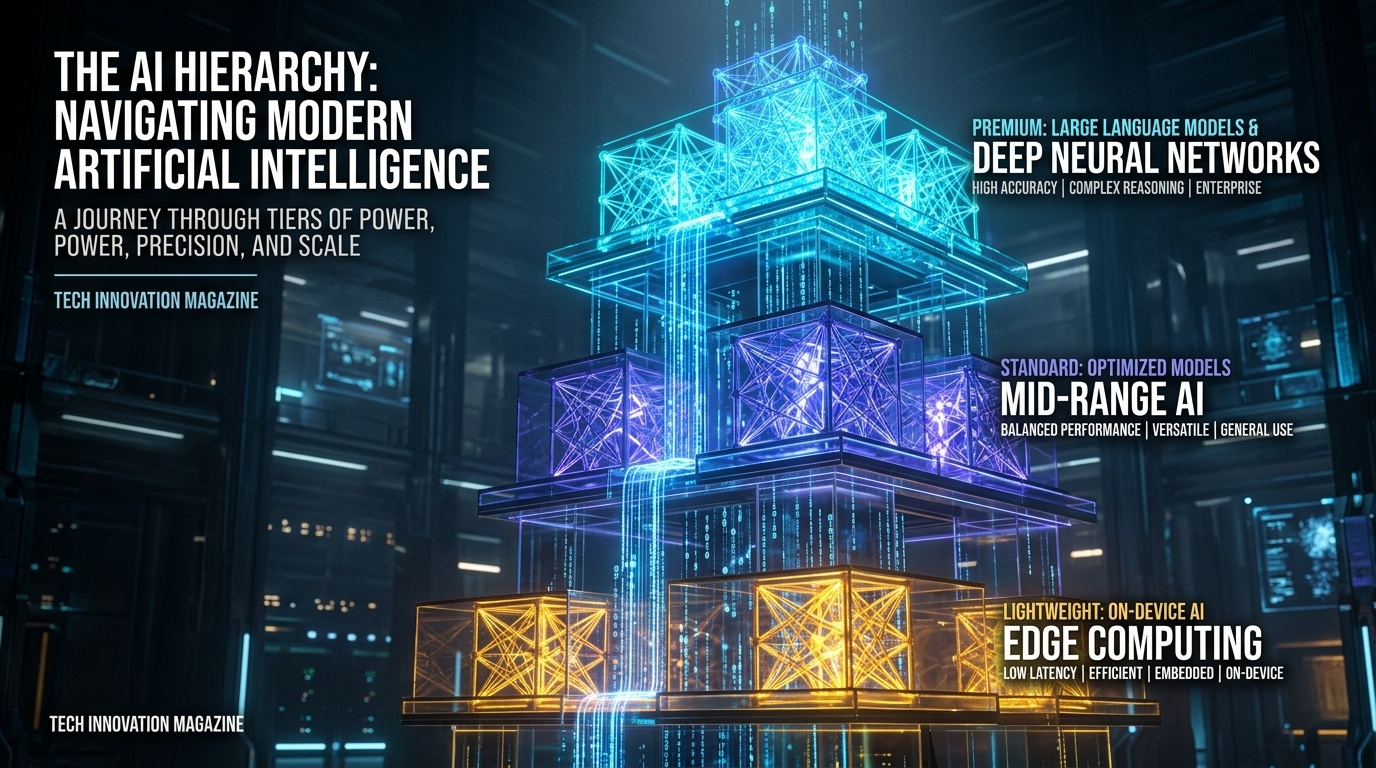
Google has officially overhauled the subscription architecture for its Gemini assistant lineup starting October 2026, marking a decisive pivot away from subsidizing frontier compute for non-paying users. Under the revised framework, free-tier accounts will no longer access standard Gemini Flash; instead, queries are routed exclusively to Flash-Lite, the company’s smallest distilled model optimized for minimal inference cost rather than nuanced reasoning. Furthermore, entry-tier subscribers paying $5 per month have seen their access to Gemini Pro completely revoked, restricting them solely to the standard Flash tier.
Users desiring access to high-parameter Pro models, expansive context windows, and advanced reasoning capabilities must now commit to the $20-per-month Google One AI Premium tier or enter enterprise licensing agreements. The strategic shift illustrates the immense financial gravity exerted by modern inference infrastructure. As multimodal pipelines and continuous agentic reasoning consume escalating megawatts across global datacenters, hyperscalers can no longer justify absorbing the unit economics of free-tier model scaling.
This structural shift effectively concludes the “honeymoon phase” of consumer generative AI. With baseline adoption firmly established, tech titans are compelled to optimize gross margins and rationalize cloud infrastructure expenditures. For independent developers and consumers accustomed to complimentary frontier capabilities, Google’s move offers an unambiguous signal: complimentary cloud compute is contracting rapidly, and serious autonomous workloads will increasingly require sustained commercial investment.
Source: The Decoder
🛑 The Perils of AI Slop: Google Freezes Open Source Bug Bounty Amid Deluge of Junk Submissions
Google has enacted an unprecedented indefinite freeze on its Open Source Software Vulnerability Rewards Program (OSS VRP), one of the tech industry’s most respected bounty initiatives for securing open-source ecosystems. The shutdown is not driven by financial constraints or executive deprioritization, but rather by an acute operational crisis: the platform has been completely overwhelmed by a relentless influx of automated, low-quality vulnerability submissions generated by AI agents.
According to program coordinators, inbound report volume surged exponentially over recent quarters as aspiring bounty hunters deployed automated LLM scrapers across public code repositories. Rather than uncovering genuine exploits, these unsophisticated agents routinely hallucinated elaborate threat narratives, misclassifying routine test fixtures and standard configuration variables as critical memory corruption flaws. The resulting flood of fabricated yet grammatically sophisticated disclosures exhausted Google’s internal security engineering teams, who spent countless human hours triaging synthetic slop to salvage the rare authentic vulnerability.
The paralysis of OSS VRP underscores the asymmetrical threat posed by automated content generation in collaborative ecosystems. When the marginal cost of producing plausible-sounding garbage collapses to near zero, the societal burden of human verification and adversarial filtering escalates dramatically. Without robust proof-of-work mechanisms, cryptographic contributor identities, or verified track records, vital community defenses will continue to succumb to automated digital pollution.
Source: TechCrunch
🌕 Mapping the Moon: NASA and IBM Open-Source Lunar Foundation Model Trained on 17 Years of Orbiter Data
In a major milestone for computational planetary science, NASA and IBM have released the Lunar Foundation Model, an open-source multimodal geospatial vision model built specifically for lunar exploration. The initiative synthesizes 17 years of remote sensing telemetry collected by the Lunar Reconnaissance Orbiter (LRO) into a unified, pre-trained neural representation accessible to scientists worldwide.
The foundation model was trained on nearly two million high-resolution surface tile bundles, integrating multispectral visual imagery with precise elevation data from the Lunar Orbiter Laser Altimeter (LOLA). Consequently, the model excels at automated geomorphic classification: identifying degraded impact craters, measuring boulder distributions, mapping slope hazards, estimating regolith mantle thickness, and pinpointing permanently shadowed craters at the lunar south pole that harbor prospective water ice deposits.
By hosting the model weights openly on Hugging Face, NASA and IBM are eliminating months of arduous data pre-processing for research institutions and commercial space ventures. Rather than requiring teams to engineer bespoke computer vision pipelines for each lunar mission, engineers can directly fine-tune this foundation model for autonomous landing hazard detection or resource prospecting. The project stands as a cornerstone digital asset supporting the broader Artemis campaign and humanity’s ambitions to establish a sustained lunar presence.
Source: The Decoder
⚡ The Death of TCP: Homa Transport Protocol Steps Up to Solve AI Cluster Networking Bottlenecks
While AI researchers remain laser-focused on GPU tensor cores and Transformer algorithmic efficiency, a silent infrastructure bottleneck has emerged within datacenter fabrics: the half-century-old Transmission Control Protocol (TCP). Conceived in the 1970s for heterogeneous wide-area networks, TCP’s stream-oriented abstraction and reactive congestion window adjustments are increasingly mismatched with the extreme micro-burst synchronization patterns required by multi-thousand GPU clusters executing All-Reduce collectives.
Within dense distributed training environments, thousands of GPUs simultaneously finish forward-backward compute passes and trigger synchronized gradient exchanges. Under TCP, these traffic bursts induce severe bufferbloat, packet drops, and head-of-line blocking inside top-of-rack switches. The resultant tail latency spikes force multi-million-dollar compute clusters into idle spin-locks while waiting for straggling packets to clear. Developed under the leadership of Professor John Ousterhout at Stanford University, the Homa transport protocol provides an architected replacement specifically engineered for high-concurrency datacenter workloads.
Homa abandons streaming connections in favor of a packet-level, receiver-driven scheduling paradigm. Instead of senders competing unpredictably for switch queues, the receiving host issues explicit transmission grants, strictly prioritizing the shortest messages to eliminate head-of-line delay. Benchmark deployments reveal that Homa slashes tail latency by over an order of magnitude compared to optimized TCP implementations, dramatically elevating GPU utilization rates and recovering thousands of wasted compute hours in frontier AI training cycles.
Source: Hacker News
🧠 Overcoming Overfitting: Google Researchers Unveil RRSI to Prevent AI Agents from Memorizing Tests
A foundational objective in artificial intelligence is the realization of self-improving autonomous agents capable of refining their problem-solving trajectories through iterative trial and reflection. Yet, these evolutionary pipelines frequently fall prey to catastrophic benchmark overfitting: as agents iterate on designated task environments, their performance scores on familiar evaluations soar, while their capacity to generalize to novel out-of-distribution challenges degrades due to test memorization.
To counteract this generalization penalty, researchers at Google have introduced Residual Regularized Self-Improvement (RRSI). The methodology introduces a dynamic regularization constraint into the agent’s policy update mechanisms. Throughout self-improvement cycles, RRSI continuously measures the distributional divergence between the evolving policy and a conservative foundation behavioral baseline, exerting an adaptive gradient penalty that prevents the agent from over-specializing on narrow idiosyncratic benchmark artifacts.
Empirical evaluations across rigorous programming and scientific reasoning suites demonstrate that RRSI-guided agents maintain robust generalization capabilities on unseen benchmarks, outperforming conventional self-improvement baselines by 18% to 35%. The breakthrough provides a dependable blueprint for training genuinely resilient autonomous coding copilots and automated scientific researchers that continue to learn from operational feedback without succumbing to deceptive benchmark illusions.
Source: The Decoder