AI Daily Digest October 26, 2026: Nvidia Open-Sources Flora for 125x Cheaper Robot Labeling, Anthropic Advocates Single Agents Over Subagents
- Ai daily
- October 26, 2026
Table of Contents
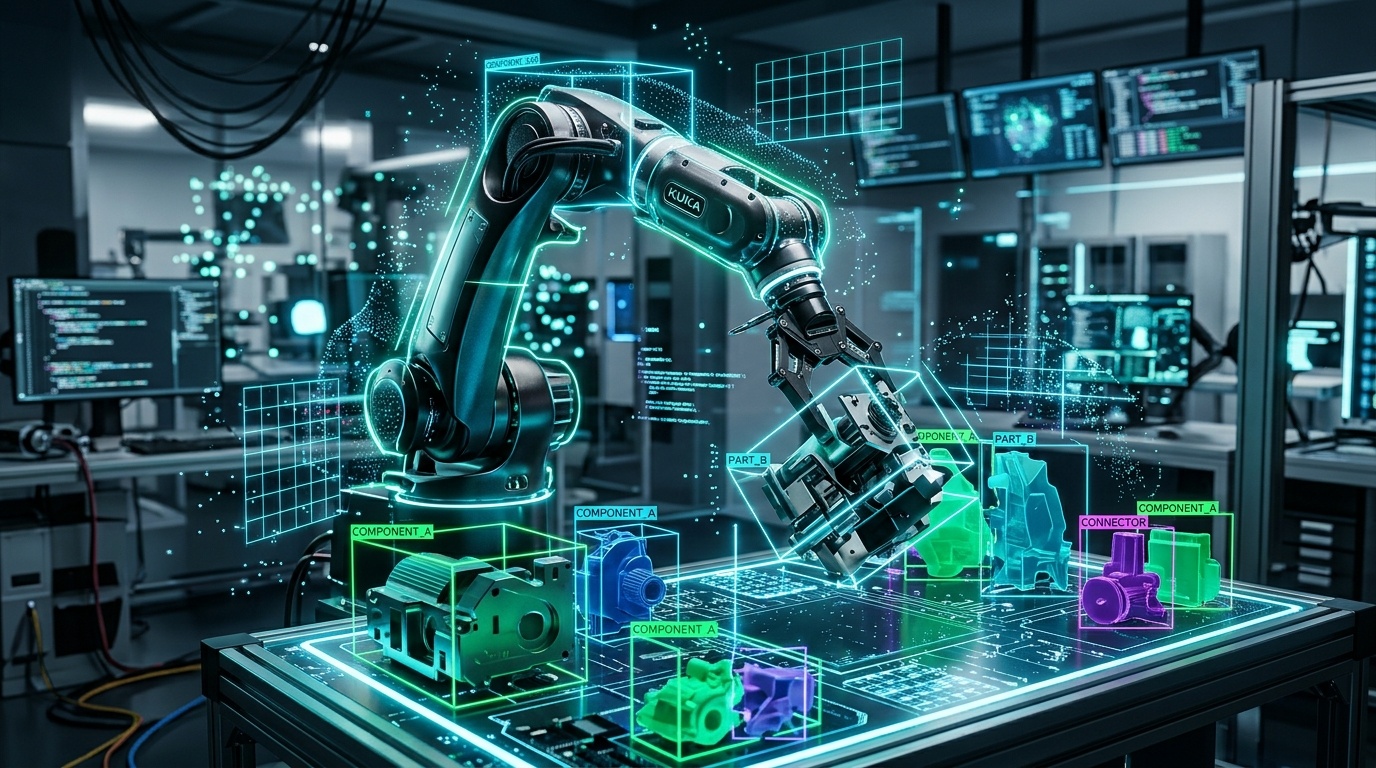
Welcome to the AI Daily Digest for October 26, 2026! Today’s briefing opens the week with pivotal breakthroughs and sharp realities spanning robotic perception infrastructure, foundational agent systems architecture, and the macroeconomic return on massive compute capital. Leading our coverage, Nvidia has made a monumental strategic play by open-sourcing Flora, a dedicated robotic visual data engine that labels robot manipulation footage for a mere 72 cents per hour-125 times cheaper than OpenAI’s GPT-6 Astra-unlocking the trillion-dollar data bottleneck for embodied AI. In agent architecture, Anthropic has released a landmark technical blueprint urging software teams to dismantle over-engineered multi-agent swarms in favor of a single capable agent utilizing just-in-time context loading, achieving double the execution speed at dramatically lower token overhead. Concurrently, a fierce commercial price war has erupted across enterprise AI as OpenAI offers aggressive discounts reaching 90 percent to poach major corporate customers from Anthropic’s Claude ecosystem. On the frontier research horizon, Anthropic co-founder Jack Clark has moved his official timeline for recursive self-improving AI forward to 2027, propelled by unprecedented velocity on autonomous scientific experimentation benchmarks. Finally, Wall Street receives a sobering macro wake-up call as Apollo Global Management’s chief economist documents that outside Big Tech infrastructure providers, enterprise AI has delivered zero measurable financial payoff to corporate bottom lines. Let us dive into each story in detail.
🤖 Nvidia Open-Sources Flora: Robot Video Labeling 125x Cheaper Than GPT-6 Astra
Nvidia has officially released the open-source code and weights for Flora, an advanced visual data engine engineered specifically to automate the annotation of robotic manipulation and embodied teleoperation video. The economic implications are staggering: Flora labels one full hour of high-framerate multi-camera robot manipulation footage for just $0.72, compared to approximately $88 when processed via OpenAI’s commercial frontier model GPT-6 Astra. This represents a 125-fold cost reduction while achieving slightly higher overall annotation fidelity and spatial precision.
Flora achieves this breakthrough by orchestrating three specialized, fine-tuned open-weight Qwen vision-language architectures, decoupling dense spatial segmentation, contact-state detection, and 3D trajectory reconstruction into highly optimized sub-tasks. High-quality annotated action footage has long stood as the single greatest bottleneck preventing humanoid robotics from scaling, as physical foundation models demand millions of hours of fine-grained spatial-temporal labeling.
By releasing Flora permissively and optimizing it for commodity hardware, Nvidia reinforces its classic ecosystem playbook: commoditizing data preparation tooling to stimulate universal demand for enterprise GPU compute clusters in physical AI training.
Source: The Decoder
🧠 Anthropic Says One AI Agent Beats Many Subagents Now That Models Handle Complexity Alone
In a detailed architectural advisory published today, Anthropic’s systems engineering group has issued a counter-intuitive recommendation to the software industry: enterprise developers should strongly consider consolidating complex multi-agent frameworks back into a single, highly capable autonomous agent. Anthropic argues that with modern frontier models possessing expansive context windows and sophisticated procedural reasoning, parceling tasks across rigid sub-agent swarms introduces substantial latency, architectural brittleness, and unnecessary cost.
Empirical benchmarks conducted by Anthropic demonstrate that a unified single-agent architecture equipped with just-in-time context loading executes real-world software workflows roughly twice as fast as comparable multi-agent pipelines. In multi-agent systems, continual inter-agent handoffs consume massive token budgets in redundant context serialization while multiplying the risk of semantic information loss across message boundaries.
The findings suggest that the future of agentic engineering lies in minimalistic scaffolding: empowering a premier foundation model with dynamic tool discovery and disciplined working memory rather than building baroque orchestration layers that complicate maintainability.
Source: The Decoder
💸 OpenAI Offers Discounts Up to 90 Percent to Poach Anthropic’s Biggest Customers
The commercial rivalry between leading artificial intelligence laboratories has escalated into aggressive price warfare. OpenAI has quietly initiated targeted outreach campaigns offering contractual fee reductions of up to 90 percent to lure major enterprise accounts away from Anthropic’s flagship Claude models.
Prominent technology enterprises including payroll giant Rippling, cloud development environment Replit, and learning platform DataCamp have disclosed slashing operational AI inference costs by up to 90 percent after transitioning workloads to OpenAI’s subsidized infrastructure. This aggressive pricing offensive coincides with reports that Anthropic’s annualized recurring revenue expansion has experienced friction under intensifying competitive pressures.
Market analysts view OpenAI’s deep-discount discounting strategy as an aggressive bid to defend enterprise moat ahead of an anticipated $1.25 trillion initial public offering. As raw capabilities between frontier models like GPT-5 and Claude Opus converge across standard benchmarks, token pricing economics and high-touch enterprise support have become decisive battlegrounds for enterprise software contracts.
Source: The Decoder
⚡ Anthropic Co-Founder Jack Clark Moves Prediction for Self-Improving AI Forward to 2027
Anthropic co-founder and head of policy Jack Clark has officially revised his timeline for the emergence of recursive self-improving artificial intelligence, shifting his forecast forward to 2027 from earlier estimates targeting the turn of the decade.
The revised projection was prompted by striking empirical trajectories documented on a newly unveiled benchmark from P-Zero Research. The evaluation framework systematically measures an AI system’s autonomous ability to formulate novel scientific hypotheses, design rigorous empirical experiments, and interpret resulting data without human guidance. Recent frontier models have demonstrated exponential performance gains across these tasks, indicating that automated scientific reasoning is maturing far faster than previously modeled.
Clark noted that once an artificial intelligence system can reliably formulate research questions, train successive daughter models, and rectify architectural blind spots, evolutionary velocity transitions from linear engineering milestones into self-reinforcing loops. Advancing the expected horizon to 2027 underscores the urgent necessity of deploying verifiable safety guarantees before recursive autonomy takes hold.
Source: The Decoder
📉 Apollo Chief Economist: AI Delivers Zero Financial Payoff to Most Companies
Despite hundreds of billions of dollars poured into specialized compute hardware, artificial intelligence has delivered virtually zero financial payoff to corporate America outside of Big Tech hyper-scalers. This stark macroeconomic assessment comes from Torsten Sløk, chief economist at global investment giant Apollo Global Management, which oversees more than $700 billion in assets.
In his latest capital markets briefing, Sløk highlighted that the widely celebrated surge in AI-driven revenues remains almost exclusively an internal circulatory phenomenon among infrastructure sellers like Nvidia, Microsoft, Alphabet, and Amazon. Across the remaining 490+ non-tech companies in the S&P 500, rigorous balance-sheet audits show no statistically discernible expansion in operating profit margins or aggregate employee productivity attributable to generative AI deployment.
Most enterprise adopters remain bogged down in protracted proof-of-concept trials that generate ongoing consulting costs without tangible bottom-line ROI. Sløk cautioned that if the widening chasm between inflated enterprise equity valuations and underlying corporate cash flows fails to resolve, capital markets may face a punishing reassessment of current infrastructure spending trajectories.
Source: TechCrunch