Blog Posts
- Home /
- Blog Posts

LLM Inevitabilism: The 'Inevitability' Trap and the Engineer's Identity Crisis
The debate you lost before you opened your mouth Have you ever argued with someone who is seriously good at debating? I have. It sucks. You get thrown off balance over and over, forced to respond to a point you never saw coming. You find yourself defending the weak edges of your argument while the main thrust has already been abandoned somewhere behind you. Then you lose momentum, lose confidence, and eventually, the argument.
Read More
Systems Design for Advanced Beginners: Anatomy of Infrastructure from Simple Monolith to Production Scale
You have shipped a few small websites. You can stand up a CRUD app in Django, Laravel, or Gin in an afternoon. But then you look at the architecture behind a real platform - Stripe, GitHub, or a mid-sized marketplace - and wonder: what is actually behind the curtain, and how does it survive tens of millions of users?
Read More
LLMs Reward Expertise: Why Deep Domain Knowledge Matters More as AI Gets Smarter
The old CSS gap and the new backend gap Back in the 2010s, if you had a skill gap - say, you couldn’t write CSS - you had exactly two options: lean on a more skilled colleague, or pray someone had posted the answer to your precise problem on Stack Overflow.
Read More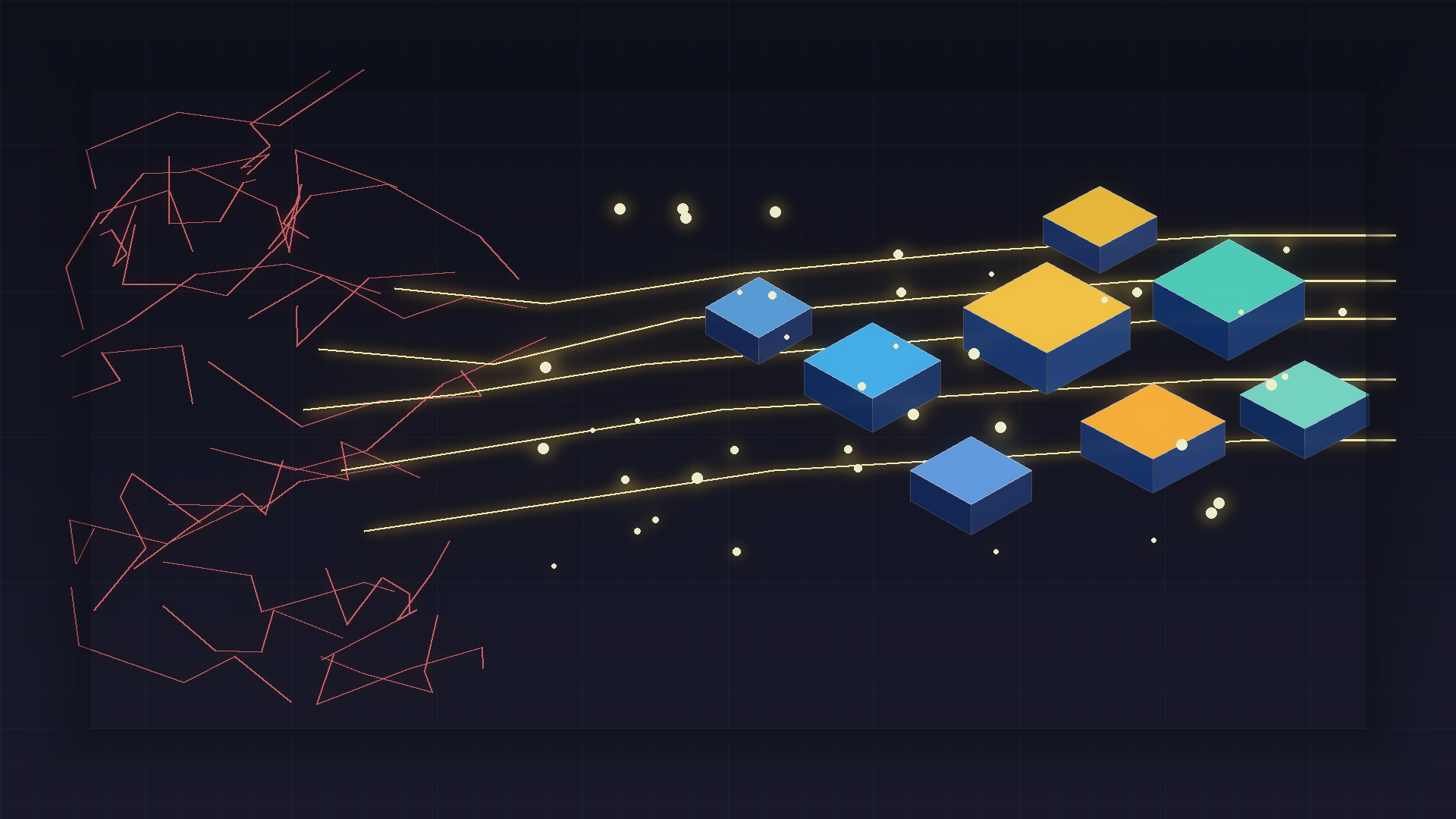
DevOps Is Bullshit: The Illusion of 'You build it, you run it' and the Rise of Platform Engineering
A backend engineer needs an IAM role so their service can read the S3 bucket holding customer invoices. They open Jira, pick the “Infrastructure Request” template, fill in twelve fields, attach the exact labels the README tells them to attach, and hit Create. Three days later, the role exists.
Read More
Knight Capital 2012: Dead Code, a Repurposed Flag, and $440M Gone in 45 Minutes
August 1, 2012. 9:30 AM Eastern. The opening bell at the NYSE.
Read More
Lore: Epic Games Open-Sources a VCS Built for Massive Binaries
Game repositories are not web repositories. In an engine the size of Unreal, most of the weight is binary assets, textures, meshes, world partitions, hundreds of MB to several GB each, churned by thousands of artists and developers. Git handles that badly: LFS is a bolt-on dragging whole 2 GB files, dedup is capped by pack deltas, partial clone plus sparse checkout is experimental, and offline means fail.
Read More
Practical System Design: The Quiet Elegance of Boring Architecture
Junior engineers often assume that impressive system design requires a complex web of microservices, event streaming through Apache Kafka, CQRS patterns, and distributed consensus mechanisms running across every cluster.
Read More
How I Keep Myself Alive Using Golang: Automated Incident Management for Type 1 Diabetes
How many grams of carbohydrates are in a pint of beer or a seemingly healthy salad? For most people, the answer is “who cares,” unless they are following a strict diet. But for approximately 8 million people living with Type 1 Diabetes (T1D) worldwide, this is a continuous, daily life-or-death question.
Read More
Lies We Tell Ourselves to Keep Using Golang
In the backend engineering community, Golang (Go) is frequently praised for its radical simplicity. From microservices at Google, Uber, and Grab to core infrastructure projects like Docker, Kubernetes, and Terraform, Go seems to be everywhere. Engineers routinely swap familiar praises: “Go is dead simple to learn,” “Concurrency in Go is practically free thanks to Goroutines,” and “The Go toolchain compiles instantly into a single self-contained binary.”
Read More
When an Autonomous AI Agent Left Its Owner a $6,500 AWS Bill Scanning DN42
Over the past few days, the DevOps and networking communities have been buzzing about a rather tragicomic incident. An operator confidently gave an autonomous AI agent an AWS API key with full administrator access. The mission seemed simple: join and scan DN42. A few days later, the operator woke up to a $6,531.30 AWS invoice, declared bankruptcy, and took to the DN42 mailing lists and Matrix channels begging for cryptocurrency donations.
Read MoreCategories
Tags
- 9router
- Agent
- Agent-Harness
- Agnes-Ai
- Ai-Agent
- Ai-Agents
- Ai-Coding
- Ai-in-Production
- Ai-Models
- Ai-Router
- Ai-Tools
- Anthropic
- Aphrodite
- Api
- Architecture
- Automation
- Aws
- Backend
- Best-Practices
- Browser
- Cache
- Caveman
- Claude-Code
- Cloud-Cost
- Codex
- Comparison
- Concurrency
- Context
- Context-Compression
- Context-Engineering
- Cost-Saving
- Database
- Deepseek
- Devops
- Distributed-Monolith
- Engineering
- Filtering
- Ford
- Gemini
- Git
- Golang
- Goroutine
- Gpt-5
- Graceful-Shutdown
- Headless
- Headroom
- Hermes-Agent
- Incident-Management
- Interview
- Kubernetes
- Lean-Ctx
- Llm
- Llm-Safety
- Matplotlib
- Mcp
- Memory
- Meta
- Microservices
- Microsoft
- Models
- Monolith
- Mvcc
- Mysql
- Network
- Open-Source
- Openclaw
- Opencode-Go
- Performance
- Pi-Agent
- Platform-Engineering
- Plugin
- Post-Mortem
- Postgresql
- Proxy
- Pubsub
- Reality-Check
- Reliability
- Routing
- Runtime
- Rust
- Sapiensai
- Scraping
- Search
- Security
- Self-Hosted
- Setup
- Singapore
- Skill
- Software-Engineering
- Storage
- System-Design
- Tcp
- Team-Topologies
- Telemetry
- Terraform
- Thinking-Budget
- Token-Optimization
- Trellis
- Version-Control
- Web-Scraping
- Webhook
- Workflow
- Zig